The Center's work on 'Income Inequality' Issues


Will High-Income People Work Less if the High-Income Tax Cuts Expire?

November 30, 2012 at 4:42 pm

Senate Minority Leader Mitch McConnell (R-KY) claimed yesterday that allowing the top two income tax rates to rise to Clinton-era levels would harm the economy by discouraging high-income taxpayers from working.  “Rates matter because they affect behavior. The higher the tax rate, the higher the disincentive to work,” he said.  This ignores the fact that the economy and jobs grew more strongly after the Clinton tax increases than after the Bush tax cuts.  Moreover:

  • “Overall, evidence suggests [high-income Americans’] labor supply is insensitive to tax rates,” tax expert Len Burman has told Congress.  As we explained in a recent report, raising marginal tax rates may encourage some high-income taxpayers to work less because they will keep less of each dollar they earn.  But others will choose to work more, in order to make as much money after taxes as they did before the tax increase.  The evidence suggests that for high-income taxpayers, these two opposing responses largely cancel each other out.
  • Moderate- and low-income workers are much more responsive to changes in tax rates than are workers at the top. The top 40 percent of income earners would change their work hours by less than one-fifth as much, in response to a change in tax rates, as would the bottom 10 percent of income earners, according to Congressional Budget Office estimates.

In fact, letting the high-end Bush tax cuts expire on schedule at the end of this year would shrink gross domestic product (GDP) by just 0.1 percent in 2013.

Over ten years, letting those high-end tax cuts expire also would also shrink deficits by nearly $1 trillion over ten years, boosting national saving, private investment, and long-term economic growth.

See our blog series and report for more on the economic effects of raising the top tax rates.

Bob Rubin on Taxes: Essential Reading With a Record Behind It

November 13, 2012 at 1:55 pm

As Washington focuses on critical budget decisions, former Treasury Secretary Bob Rubin has a perfectly timed op-ed in the New York Times that makes a convincing case for returning to the Clinton-era tax rates on incomes over $250,000 as part of a balanced deficit-reduction package.

Rubin was a key architect of President Clinton’s 1993 economic plan.  With budget deficits high and projected to hit record levels, Clinton adopted a balanced approach of spending cuts and tax increases, including a rise in the top tax rate from 33 percent to 39.6 percent.

Just like today, critics warned that raising the top rate would wreck the economy and the promised deficit reduction would not occur.  The opposite happened:  economic growth averaged nearly 4 percent annually over the Clinton years, helping turn large deficits into large surpluses (see graph).

Seeking to avoid raising tax rates, many lawmakers are focused on scaling back tax deductions, credits, and other preferences, which are known collectively as “tax expenditures.”  One problem, however, is that, for the most part, these tax expenditures are not what most Americans would consider “loopholes.”  Instead, they are popular and widely used tax preferences, such as the tax-free treatment of employer-provided health care, the deduction for home mortgage interest, and the deduction for charitable giving.  As a result, policymakers will find it politically difficult to scale back these and other popular provisions to any great extent.

“Reducing tax expenditures to pay for both lower personal income tax rates and deficit reduction may seem like a politically attractive alternative to raising tax rates or cutting entitlements or other spending,” Rubin notes.  But, he warns, pursuing large cuts in tax expenditures could have us go “down a road that leads nowhere.”

Policymakers should heed Rubin’s advice:  let the Bush high-end tax cuts expire and return to the Clinton-era top tax rates.

Five Points Worth Remembering About Taxes and the Poor

October 18, 2012 at 2:54 pm

At a recent Tax Analysts panel discussion, I provided some background on the taxes that low-income people pay and what they have at stake as we approach an intense period of decision-making on federal tax and budget issues.  Below are five of my main points:

1. Most of the people who don’t owe federal income tax are workers, elderly, disabled, or students.

The largest single category is people who work.  Here are just a few examples, based on our analysis of Census data:

  • 2.1 million are construction workers.
  • 2.1 million work in factories and other manufacturing jobs.
  • 4.5 million work in retail stores.
  • 2.7 million help care for patients in hospitals and doctors’ offices and assist elderly people in nursing homes.
  • 3.5 million work in the restaurant and food service industry.

2. Low-income households pay significant federal taxes.

For low- and moderate-income people, payroll taxes are much more significant than income taxes.  These people also pay a much larger share of their incomes in payroll taxes than high-income people do.

The same goes for excise taxes.

3. Low-income households also pay significant state and local taxes.

Unlike federal taxes, which are progressive overall, state and local taxes fall much harder on low-income people.

4. Income growth has been weak at the bottom of the scale.

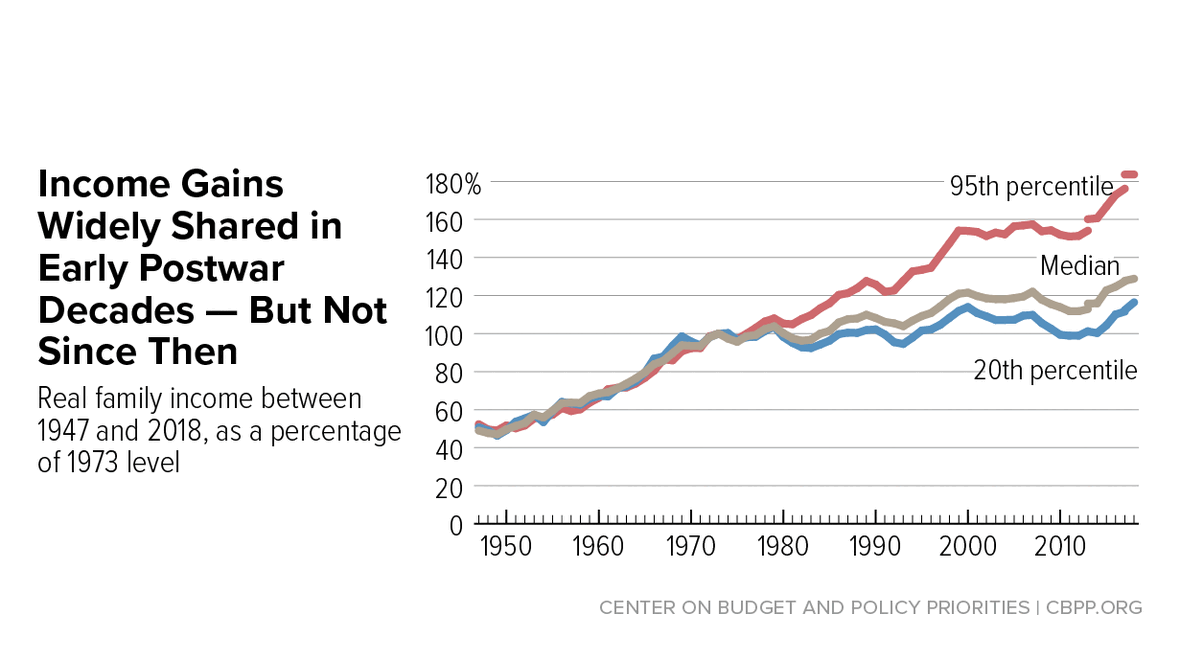
For a complex set of reasons that include globalization, technological innovation, weakened unions, and policy decisions on the minimum wage, incomes have grown very slowly at the bottom of the scale in recent decades.  Many people work hard but simply do not make much money.  Recent projections from the Bureau of Labor Statistics (BLS) underscore that this situation is unlikely to change soon.  Five of the ten occupations that BLS expects to generate the most jobs in the next decade pay below $25,000 a year.

5.Tax credits make a big difference for low-income working families.

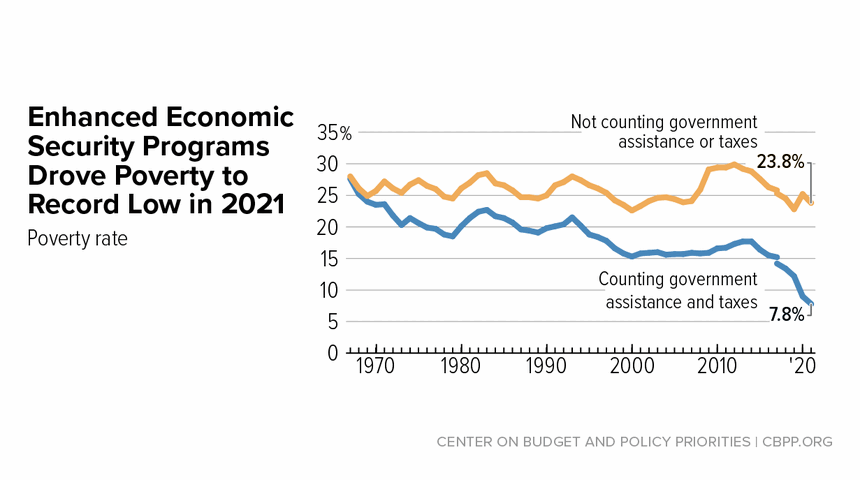
Historically, both parties have supported a robust Earned Income Tax Credit (EITC) for low-income workers, which is the best kind of welfare reform because it encourages and rewards work. Along with the Child Tax Credit, the EITC lifted 9 million working people out of poverty in 2010.  But a big part of these credits’ success reflected improvements that policymakers made in them in the 2009 American Recovery and Reinvestment Act (ARRA), which are slated to expire at the end of the year.

House-Passed Buffett Rule Doesn’t Merit the Name

September 24, 2012 at 3:39 pm

“Taxes,” Oliver Wendell Holmes Jr. famously said, “are what we pay for a civilized society.”  His reflection comes to mind in light of legislation, which the House passed last week, that would make it simpler for Americans to make voluntary contributions to reduce the public debt.

Though it’s called the Buffett Rule Act of 2012, the bill doesn’t merit the name.  The Buffett Rule says millionaires should not pay a smaller share of their income in federal tax than less well-to-do Americans (as many millionaires now do).  The House bill, however, wouldn’t change that.  Nor would it raise much money to reduce the debt.

In fact, the congressional Joint Tax Committee estimates the bill would raise $135 million (that’s million with an “m”) over ten years.  That’s less than 1/1000th (or 0.1 percent) of the $160 billion Senator Sheldon Whitehouse’s proposal to implement the Buffett Rule would raise, assuming that policymakers will extend the tax cuts of 2001 and 2003 that are scheduled to expire in December.  It’s less than 1/300th (or 0.3 percent) of the still-respectable $47 billion that Senator Whitehouse’s proposal would raise, if we assume instead that policymakers will let those tax cuts expire on schedule.

However inconsequential in fiscal terms, the House bill raises a serious point that’s related to Justice Holmes’ keen insight.  We should not treat taxes as an essentially voluntary largesse rather than as an obligation of citizenship.  You can’t run a country on donations.

Lawmakers’ aversion to raising taxes — through a real Buffett Rule or other measures — to cover the spending that benefits all Americans inevitably leads to the deficits that these same lawmakers disparage.  The same mindset also can lead some lawmakers to go soft on measures to improve tax compliance.

Higher taxes must be part of any balanced deficit reduction package, and the place to start is with the nation’s wealthiest households.

Low- and Moderate-Income Tax Credits Deliver More Bang for the Buck Than High-Income Tax Cuts

August 3, 2012 at 4:51 pm

In this week’s US News & World Report blog post, I discussed the policies that would most likely boost the flagging recovery at a time when the economy is suffering from excess unemployment and underutilized business capacity:

If policymakers want the best policies to create jobs and cut unemployment as soon as possible, they should focus on policies that boost demand for goods and services — not policies to expand the economy’s capacity to supply goods and services.

I applied this logic to a key difference between the one-year tax cut extension bills that the Democrat-controlled Senate passed last week and the Republican-controlled House passed this week.  Both bills extend the so-called “middle-class tax cuts” enacted in 2001 and 2003 and “patch” the Alternative Minimum Tax for 2012 to limit its reach to relatively high-income taxpayers.  The House bill would also extend the upper-income 2001 and 2003 tax cuts, making the dubious argument that doing so would prevent a “job-killing” tax increase on small businesses, while the Senate bill would extend tax credits that President Obama and Congress enacted in 2009 that mainly benefit low-and moderate-income households.

I opined that the $27 billion spent to extend the tax credits in the Senate bill would likely boost economic growth and job creation more than the $49 billion to extend the upper-income tax cuts in the House bill.  I didn’t have space to lay out the underlying analysis there, but here it is:

For $27 billion of tax credits to generate the same increase in gross domestic product (GDP) or employment as $49 billion in upper-income tax cuts, the tax credits would have to have a GDP-bang-for-the-budgetary-buck that is nearly twice as large.  In fact, the evidence suggests a much larger difference.

  • In its most recent quarterly analysis of the estimated impact of the 2009 Recovery Act on employment and economic output, the Congressional Budget Office (CBO) estimates that refundable tax credits added between 40 cents and $2.10 to economic output per dollar of budgetary cost and that a one-year tax cut for higher-income people added between 10 cents and 60 cents.  That’s a potency advantage of 3-to-1 or 4-to-1 for the credits.  Moreover, I think the evidence points to the effect being closer to the top of CBO’s range than to the bottom.
  • Moody’s Analytics chief economist Mark Zandi estimates that the credits add to GDP between $1.20 to $1.40 per dollar spent (CBO’s estimates are measured over a longer cumulative time period) while the effect of the upper-income tax cuts will likely be in the 30-cent to 40-cent range or less (since Zandi’s estimate is for a permanent extension, not a one-year extension).  Once again, the credits are much more than twice as cost effective.

The economy would benefit greatly from a bold plan combining temporary, high bang-for-the-buck policies that provide more support for the economy in the next year or two with a balanced plan for stabilizing deficits and debt in the longer term that begins to take effect in a few years when the economy is stronger.  It’s hard to see how the House bill — which compared with the Senate bill adds more to the deficit, does less for the economy, and makes inequality worse —moves the ball in that direction.