
BEYOND THE NUMBERS
Fewer Weeks of Benefits Available to Unemployed Workers in 24 States, Cont.
As my previous post explained, cuts took effect in 24 states this week in the number of available weeks of federal emergency unemployment insurance (UI) benefits. That’s due to changes that policymakers made to the program (called Emergency Unemployment Compensation or EUC) when they extended it early this year.
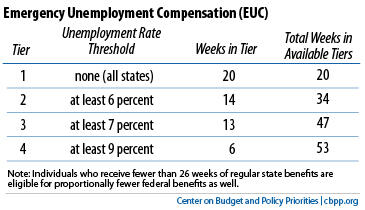
Our newly updated “Introduction to Unemployment Insurance” has the details, but basically, there are four “tiers” of EUC benefits. States with higher levels of unemployment qualify for more tiers and therefore workers in those states are eligible for more weeks of federal benefits.
Here’s what the tiers look like as of this week:
The changes that took effect this week raise the unemployment-rate thresholds that states must meet to provide benefits in the three higher EUC tiers, as this chart shows:
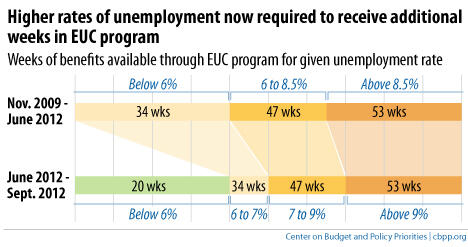
Until this week, for example, workers could receive at least 47 weeks of EUC if their state’s unemployment rate was at least 6 percent; now the threshold is 7 percent.
The next major change to the program will take place in September, when the number of weeks available will shrink for those still looking for work in all states.