The Center's work on '2001/2003 Tax Cuts' Issues


Bernstein on Income Inequality

February 9, 2012 at 2:21 pm

Testifying at a Senate Budget Committee hearing today on “Assessing Inequality, Mobility, and Opportunity,” CBPP Senior Fellow Jared Bernstein explained that, “even with recent improvements in the job market, the American economy still faces significant challenges, particularly the historically high levels of income and wealth inequality, the squeeze on middle-class incomes, and elevated rates of poverty.”  Below are the main findings of his testimony:

  • It is important to examine trends in income inequality through the lenses of various different data sources, as each has its own strengths and limitations. The fact that all of these series show similar trends toward increased dispersion of incomes is itself good evidence of the validity of their findings.
  • A key factor driving the ups and downs in the inequality trend in recent decades is capital incomes, particularly capital gains; the fact that such income is given preferential treatment in our tax code relative to ordinary income from wages is thus a relevant issue for both inequality and tax reform.
  • Some analysts and policy makers cite income mobility — movements by persons and families up and down the income scale over the course of their lifetimes, or from one generation to the next — as a reason why policy makers should be less concerned about historically high levels of inequality. However, a key finding here is that the rate of income mobility has not accelerated in recent decades; if anything, it may have slowed. Therefore, it is incorrect to argue that income mobility has offset the greater distance between income classes over time — i.e., higher inequality. It is also notable that there is considerably less mobility in the US than in most other advanced economies, including those with far lower levels of income inequality.
  • These findings suggest a negative feedback loop wherein higher inequality is blocking key opportunities, such as educational attainment, that would in turn reduce inequality and enhance mobility.
  • The potential interactions between our major economic and fiscal challenges remain a challenge for policy makers. Along with inequality, there is the related squeeze on low- and middle-class incomes, high rates of poverty, and the high, though declining, rate of unemployment. And, of course, a central concern of this committee is our bleak fiscal outlook. Addressing one of these problems could potentially exacerbate another.

Income Gains at the Top Dwarf Those of Low- and Middle Income Households

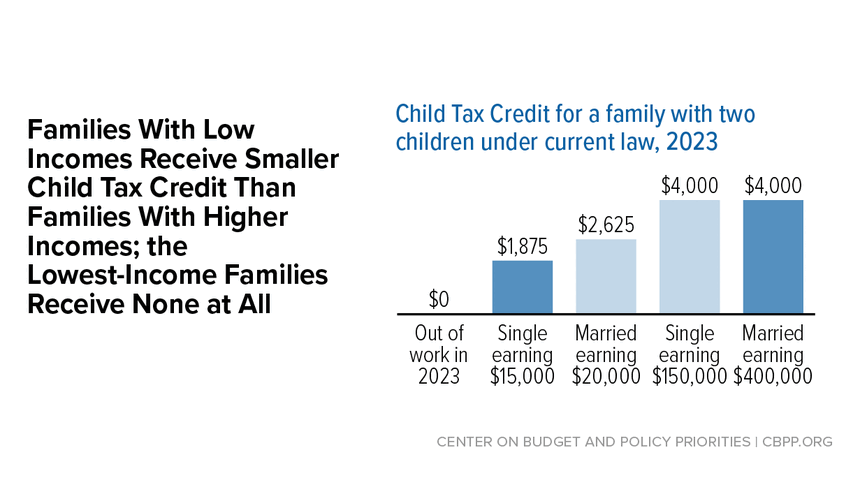
For example, recent Congressional Budget Office analysis predicts that full and sudden expiration of the 2001 and 2003 tax cuts in 2013 would push unemployment higher.  Similarly, cuts to programs that are supporting low and moderate income families, like nutritional assistance, the Earned Income Tax Credit, or the Child Tax Credit, could worsen poverty and inequality.  This worsening would further exacerbate inequality if we were to then turn around and use some of these savings to lower taxes on the wealthiest households.

While this may sound fanciful, it is not. In fact, the 2011 budget proposed by House Republicans does precisely this. As analysis from the Center on Budget and Policy Priorities shows, almost two-thirds of that budget’s spending cuts over ten years — $2.9 trillion —come from programs targeted at households with low and moderate incomes. And those budget savings are used to support tax cuts for the wealthiest households.

With this in mind, a central question of this testimony is how policymakers can address these three problems — inequality, economic slack, and the fiscal path — without solving one problem at the expense of exacerbating another problem. Most pointedly, revenue and spending policies designed to put the nation on a sustainable budget path must not exacerbate inequality, poverty, or the ongoing middle-class squeeze.

Click here for the full testimony.

Romney Tax Plan: Cuts Taxes for the Rich, Hurts the Poor, Raises Deficits

January 5, 2012 at 5:32 pm

The Urban-Brookings Tax Policy Center (TPC) has just released an analysis of Mitt Romney’s tax plan.  The chart below, using TPC figures, shows how the plan would affect people in different income groups compared to extending current policies such as President Bush’s tax cuts, which are scheduled to expire at the end of 2012.

Romney Tax Plan Would Increase Inequality

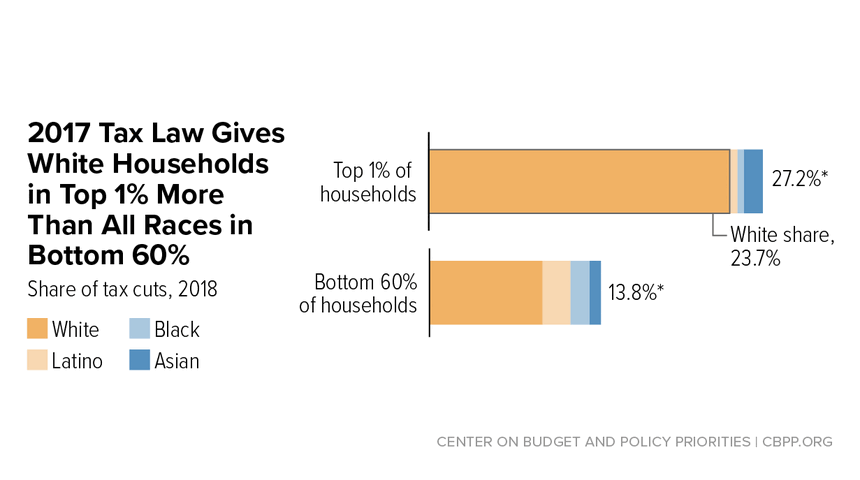
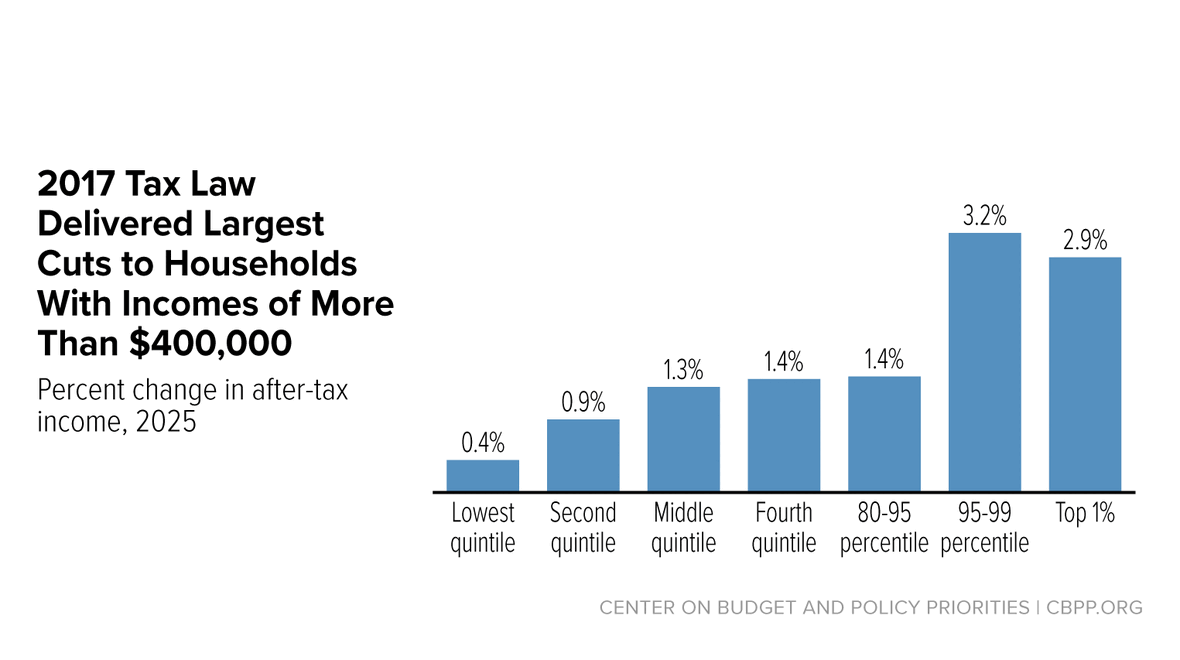
The Romney plan would provide massive tax cuts at the top of the income scale.  In fact, more than half of its total tax cuts would go to the top 1 percent of households (that is, people with incomes over $630,000), according to TPC.  The average millionaire would receive a tax cut of $146,000 in 2015, in addition to the $141,000 he or she would receive from an extension of the Bush tax cuts.

By contrast, the plan would hurt poor Americans by not extending some recently enacted tax policies aimed at low- and moderate-income families.  For example, it would eliminate recent marriage-penalty relief for working-poor families under the Earned Income Tax Credit and reduce a tax credit designed to make college more affordable for people with modest incomes.

The combination of large tax cuts at the top and tax increases at the bottom would further increase income inequality.

The Romney plan would also increase deficits by roughly $180 billion in 2015, TPC finds, which means that, over a decade, it would add roughly $2 trillion to deficits.

Examining Supercommittee Proposals

November 18, 2011 at 2:40 pm

We issued two reports today on deficit-reduction proposals in the congressional “supercommittee”:

Related Posts:

“Flatter” Taxes Aren’t Simpler, Only More Regressive

November 14, 2011 at 4:11 pm

The timely op-ed in today’s Wall Street Journal from Princeton economics professor (and former Federal Reserve vice chairman) Alan Blinder debunks a current myth in Washington that when it comes to taxes, flat equals simple.

“Many useful steps could be taken to simplify the personal income tax.  But, contrary to much misleading rhetoric, flattening the rate structure isn’t one of them,” Blinder notes.

That’s because “100% of the complexity” in the tax code derives from its many special preferences, Blinder says, not from the fact that it contains multiple brackets (i.e., that it taxes different incomes at different rates).

Think about filling out your own taxes the old-fashioned way.  The last step is to consult a table in the instructions and find out how much tax you owe.  You don’t have to break out your calculator and multiply different portions of your income against the applicable tax rate for each.  The table gives you a single figure, just as if there were a single rate.

“[F]lattening the rate structure won’t make the tax code any simpler.  It would, however, make the tax system far less progressive,” Blinder warns, by lowering the rates for high-income taxpayers.

Read more…

Plan from Toomey, Other Republicans Not a First Step Toward Balanced Deficit Reduction

November 10, 2011 at 6:13 pm

We issued an analysis today of the recent proposal by several Republican members of Congress’ deficit-reduction “Supercommittee.”  Here’s the opening:

Senator Pat Toomey and other Republicans on the Joint Select Committee on Deficit Reduction (“Supercommittee”) portray their new offer to raise close to $300 billion in revenues (under a plan to reduce deficits by about $1.5 trillion over ten years) as a significant concession, and some observers have suggested it represents a welcome first step toward a balanced deficit reduction plan to put the budget on a sustainable path.  But a closer examination of the proposal raises grave concerns and indicates that, in fact, it adds little balance.

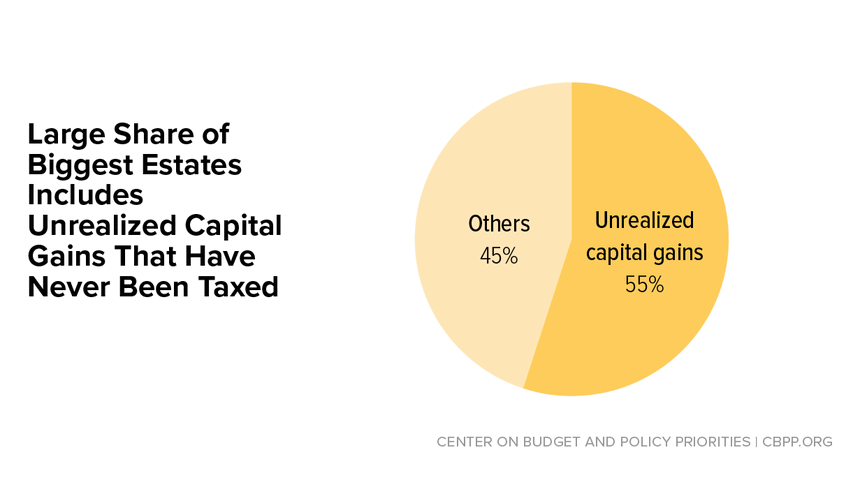
It uses savings from closing tax loopholes and narrowing other tax expenditures mainly to set tax rates permanently at levels well below those of President Bush’s tax cuts, and to make permanent both the highly preferential treatment of capital gains and dividend income under the Bush tax cuts and the temporary hollowing out of the estate tax for estates of the wealthiest one-quarter of 1 percent of Americans that Congress enacted in late 2010.  Consequently, the proposal seems designed to make only a modest revenue contribution toward deficit reduction and then to take revenues off the table for the larger rounds of deficit reduction that must follow.  Moreover, even while yielding modest savings, the revenue component would make the package less balanced by conferring large new tax cuts on the wealthiest Americans while forcing low- and middle-income Americans to bear most of the plan’s budget cuts as well as its tax increases.

Related Posts: