off the charts
POLICY INSIGHT
BEYOND THE NUMBERS
BEYOND THE NUMBERS
Another Tough Budget Year for States — and Next Year Looks No Better
With states in the third year of a fiscal crisis sparked by their steepest revenue decline on record, we’ve updated our analysis of state budget shortfalls for the current (2011) and coming (2012) fiscal years. Here are the highlights:
- To balance their budgets for fiscal year 2011 (which began July 1 in most states), states had to address $125 billion in shortfalls. Since the start of the recession, they have closed about $425 billion in shortfalls.
- Thirty-nine states are estimating $112 billion in shortfalls for 2012. We estimate that, once all states have prepared estimates, the total shortfall for 2012 will reach about $140 billion.
- While federal aid in the 2009 Recovery Act (and, to a smaller degree, in the August 2010 jobs bill) has lessened state cuts in services and tax increases over the past few years, that help is running out. About $60 billion remains to help with states’ 2011 fiscal problems, and by 2012 only $6 billion will remain.
Recent Census data show that state revenues are stabilizing, as we noted earlier, but they remain far below pre-recession levels — and well below levels needed simply to maintain current public services.
Image
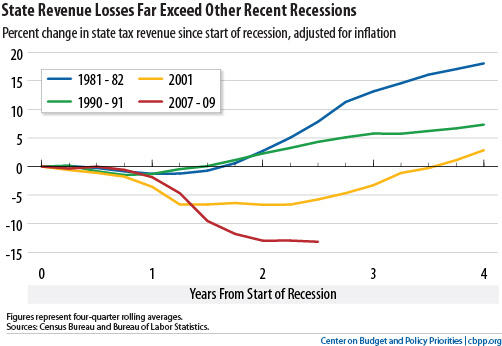
The longer the fiscal crisis continues, the more damaging the potential cuts to public services, since states have already made the less painful cuts. That’s just one of several reasons why most states have rejected a cuts-only strategy in favor of a balanced approach that includes more revenue.
Topics:

Receive the latest news and reports from the Center